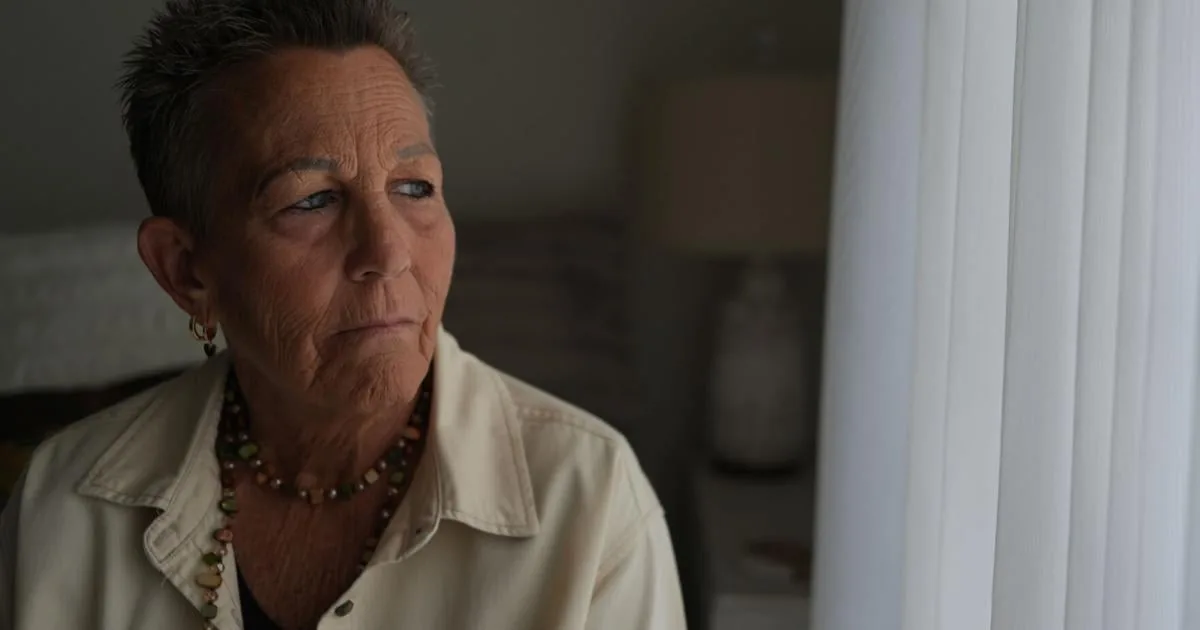
CHICAGO, IL — Deb Robertson spent months hoping she would live long enough to see Illinois put a new end-of-life law into effect. On Sept. 12, that hope became reality. The 68-year-old cancer patient celebrated at home with friends and family as “Deb’s law,” named after her, began allowing eligible terminally ill adults to seek a lethal prescription.
Robertson’s fight for the law grew out of a rare, aggressive cancer that ended her three-decade career working with homeless youth. As the disease advanced, she said she felt like “a walking time bomb.” She turned that fear into public advocacy, testifying, speaking publicly and traveling from her home near Chicago to Springfield to press lawmakers to approve medically assisted death.
How Deb Robertson turned her diagnosis into a public campaign
Robertson’s diagnosis forced her into retirement and changed the rhythm of her life. Instead of planning around work, she began planning around treatment, symptoms and the possibility that she might not make it to the law’s effective date. That urgency helped make her one of the most visible faces of the movement in Illinois.
She argued that people facing a terminal illness should be able to choose how their lives end. “I believe that God gave me this extra time so that I could see this law through,” Robertson said. “I believe that people have the right to leave this Earth with dignity and on their own terms.”
Her home life reflects that commitment as well. Robertson and her wife, Kate, have been together for 45 years and live in Lombard, Illinois. The couple recently walked hand in hand to a park where they plan to plant a tree next to Deb’s ashes.
Illinois becomes the first Midwestern state to legalize the option
Illinois is now the first Midwestern state and the 13th state overall, plus the District of Columbia, to authorize medical aid in dying. New York and Illinois were the latest states to join a movement that has expanded steadily across the country, even though the practice remains uncommon.
Under the law, patients generally must have an incurable illness and less than six months to live. They also must be able to understand and make a voluntary decision and must be able to take the prescribed medication without assistance, according to Thaddeus Pope, a bioethicist at Mitchell Hamline School of Law in St. Paul, Minnesota.
The broader U.S. track record is long enough, supporters say, to show the laws can operate with safeguards. Oregon passed the first such statute, and it took effect in 1997. Since then, roughly 15,000 deaths have occurred under similar laws nationwide.
Doctors and advocates say the laws offer comfort and control
Supporters say the laws do not push people toward death so much as offer reassurance that they will have control if suffering becomes unbearable. Dr. Jessica Kaan, medical director for End of Life Washington, said she has helped hundreds of patients in Washington and Oregon and has seen how different serious illnesses can shape end-of-life decisions.
Among the most difficult cases, she said, are patients with ALS, a progressive disease that attacks the nerves controlling movement and speech. She described it as “a particularly gruesome and awful way” for most people to imagine dying. For many terminally ill patients, Kaan said, simply having the option can be a source of comfort, even if they never use it.
Peter Redgrove, a San Diego man with late-stage bone marrow cancer and leukemia, used California’s law on Sunday after 19 rounds of chemotherapy and a long hospital stay. He said he saw no reason to keep enduring pain and suffering when there was a legal way to end his life on his own terms.
Religious leaders and disability advocates keep fighting the law
Opposition to medically assisted dying remains strong among many religious groups, lawmakers and disability advocates. Ebony Payne, a Chicago disability advocate who is quadriplegic, joined a lawsuit arguing that “Deb’s law” discriminates against people with disabilities. She said the law puts people with developmental, mental and physical disabilities at risk.
A judge denied the request for a preliminary injunction before the law took effect, saying the plaintiffs had not shown standing or imminent harm. Payne said she was disappointed and hopes the law will eventually be struck down.
Illinois’ six Catholic dioceses also condemned the law, calling it a dangerous step. Catholic leaders argued that the state should not normalize suicide and that healthcare providers should not be forced to participate in what they view as assisted suicide.
A wider national debate over end-of-life choices
The debate over medically assisted dying has spread beyond Illinois and into broader questions about faith, autonomy and medical ethics. Pope Leo XIV urged Gov. JB Pritzker not to sign the bill and later said he was very disappointed that his home state approved a law the Catholic Church condemns.
Other religious and academic voices have moved in the opposite direction. Rabbi Dvora E. Weisberg said a Reform Jewish committee spent more than two years reviewing texts and speaking with doctors and families before writing guidance that reverses earlier positions. She said modern medicine has changed the way people experience prolonged dying and pain.
Advocates also argue that the language matters. They say the laws are not the same as suicide, and they point to the American Association of Suicidology’s position that medical aid in dying is a separate phenomenon. For Robertson, the issue remains personal and practical: the new law gives her peace, and it gives terminally ill patients a choice.