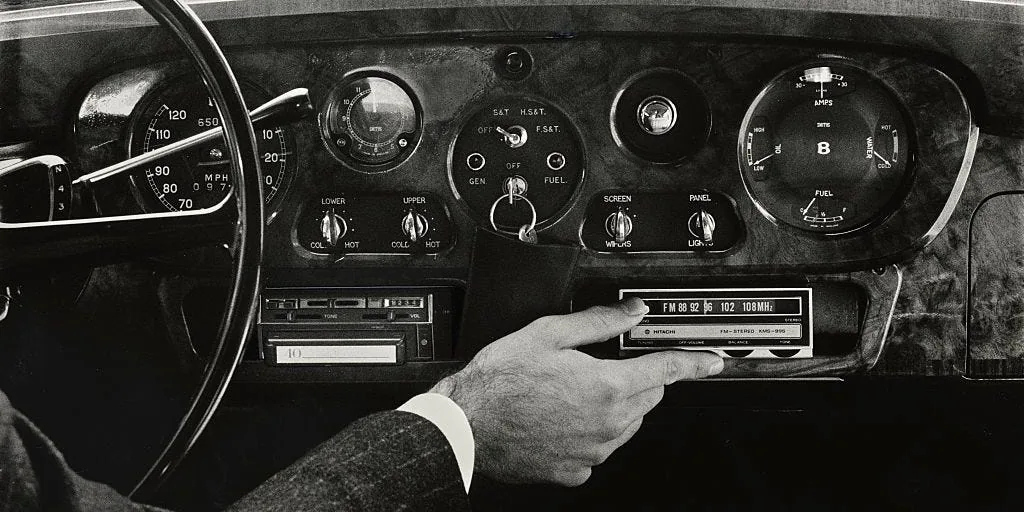
WASHINGTON, DC — The AM Radio for Every Vehicle Act cleared the U.S. House of Representatives this week with bipartisan support, advancing a proposal that would require AM radio in every new vehicle made or sold in the United States.
If the measure becomes law, automakers that have removed AM capability from some models would have to restore it. The bill still needs to pass the U.S. Senate and reach President Trump before it can take effect.
Supporters say the goal is to make sure drivers can still receive broadcast information when internet or cellular service is unavailable. That argument has helped drive interest in a mandate for both gasoline-powered cars and electric vehicles.
Why lawmakers say AM radio still matters in emergencies and rural areas
AM radio remains a widely used medium, with more than 4,300 active AM stations in the United States, according to the Federal Communications Commission. Nielsen says more than 80 million Americans listen to AM radio each month, which is about 23 percent of the U.S. population.
The bill’s backers have pointed to the service’s role in rural communities and during natural disasters, when radio can be one of the most dependable ways to reach the public. That reliability is the main reason the legislation seeks to preserve AM reception in vehicles.
For many drivers, the issue is not nostalgia but access. In an emergency, an AM signal can provide news and alerts even when other networks are overloaded or offline.
Electric vehicles are the hardest place to keep AM signals working
Automakers have increasingly dropped AM radio from some electric vehicles, and the technical reason is tied to the motors themselves. Frequencies generated by electric drivetrains can interfere with AM reception, making the signal difficult to use cleanly.
In gas-powered cars, preserving AM equipment is relatively inexpensive. But in EVs, manufacturers have often chosen to leave the feature out rather than engineer a fix for a problem only some drivers would notice.
That approach has created a split in the market. Some vehicles still offer AM, while others have quietly abandoned it in recent years, especially among battery-powered models.
Tesla, BMW, Mazda, Volkswagen and Rivian are among brands that have left AM out of some EVs
Several automakers have already removed AM radio from parts of their EV lineups. Tesla dropped the feature in 2018. BMW has never offered AM across its EV lineup, which began with the i3 in 2013.
Mazda, Volkswagen and Rivian also omit AM in their electric models. By contrast, Toyota, Chevrolet and Ford still offer AM radio in at least some of their EVs.
Ford briefly announced that it would remove AM radio from all of its vehicles, regardless of powertrain, for the 2024 model year. The company later reversed that decision after the bill was introduced in May 2023.
The Congressional Budget Office says the mandate would affect millions of vehicles
A Congressional Budget Office analysis estimates the legislation would affect roughly 2 million to 2.5 million vehicles each year. The agency said the cost of updating radio equipment itself would be relatively small because most EVs already include FM radio functions.
What remains less certain is the price of developing a workaround for AM interference in electric vehicles. That engineering challenge could matter more than the hardware changes required to add the function back into new cars.
The CBO also estimated that the bill would cost the federal government about $1 million over five years. Those numbers suggest the financial impact would fall mainly on automakers rather than taxpayers.
Bipartisan support leaves the Senate and White House as the next hurdles
The bill has drawn support from both sides of the political aisle, a sign that it has enough broad appeal to survive the House. Even so, it cannot become law until the Senate acts and the president signs it.
That next stage will determine whether the federal government actually imposes a nationwide AM radio requirement on new vehicles. For now, the measure remains a proposal that has cleared one chamber and is waiting on the other two steps in the process.
If lawmakers finish the job, every car sold in the United States would need to keep AM radio available, including electric vehicles where manufacturers have increasingly phased it out.